A Lithium-Ion Battery in 6 Art Styles (Drawn by AI, Corrected by Humans)
We asked an AI to draw a lithium-ion battery in 6 art styles. It invented components like "Batrolyte". Here's what the real parts are called.

In October 2023, we asked DALL-E to illustrate a lithium-ion battery in different art styles. The results look great from a distance. Up close, the AI invented components that don't exist: "Batrolyte", "Nephocate", "Electrocharter".
That makes these images useless as diagrams and quite good as a teaching device. Spotting what the AI got wrong is a decent test of whether you know your battery anatomy. So here are all six, each with a correction of what the labels should say.
A real lithium-ion cell has five main components. Keep these in mind as you scroll:
- Anode: the negative electrode, usually graphite, coated on copper foil
- Cathode: the positive electrode, a lithium metal oxide such as NMC or LFP, coated on aluminium foil
- Separator: a thin porous polymer film that keeps the electrodes apart while letting lithium ions through
- Electrolyte: a lithium salt in organic solvent that carries the ions between electrodes
- Current collectors: the copper foil (anode side) and aluminium foil (cathode side) that carry electrons to the external circuit
During discharge, lithium ions move from anode to cathode through the electrolyte, and electrons take the external route through your device. Charging reverses it. That's the whole trick.
1. Bauhaus
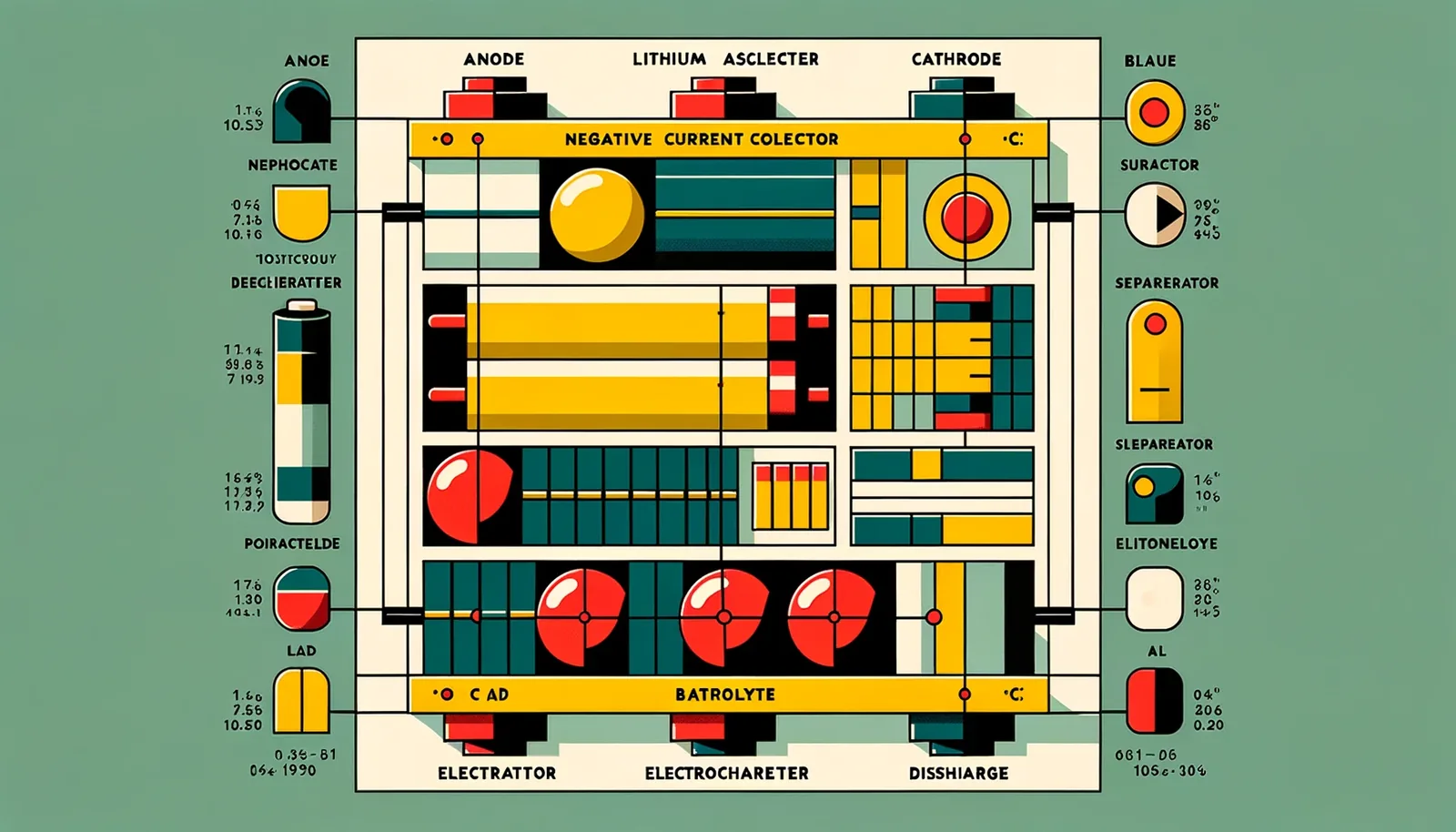
The AI wrote "Negative Current Colector" (one L short) and invented "Batrolyte" and "Electrocharter". The real terms: the negative current collector is copper foil, the liquid between the electrodes is the electrolyte, and there is no such thing as an electrocharter. The bottom row should read charge and discharge, the two directions lithium ions travel.
2. Impressionism
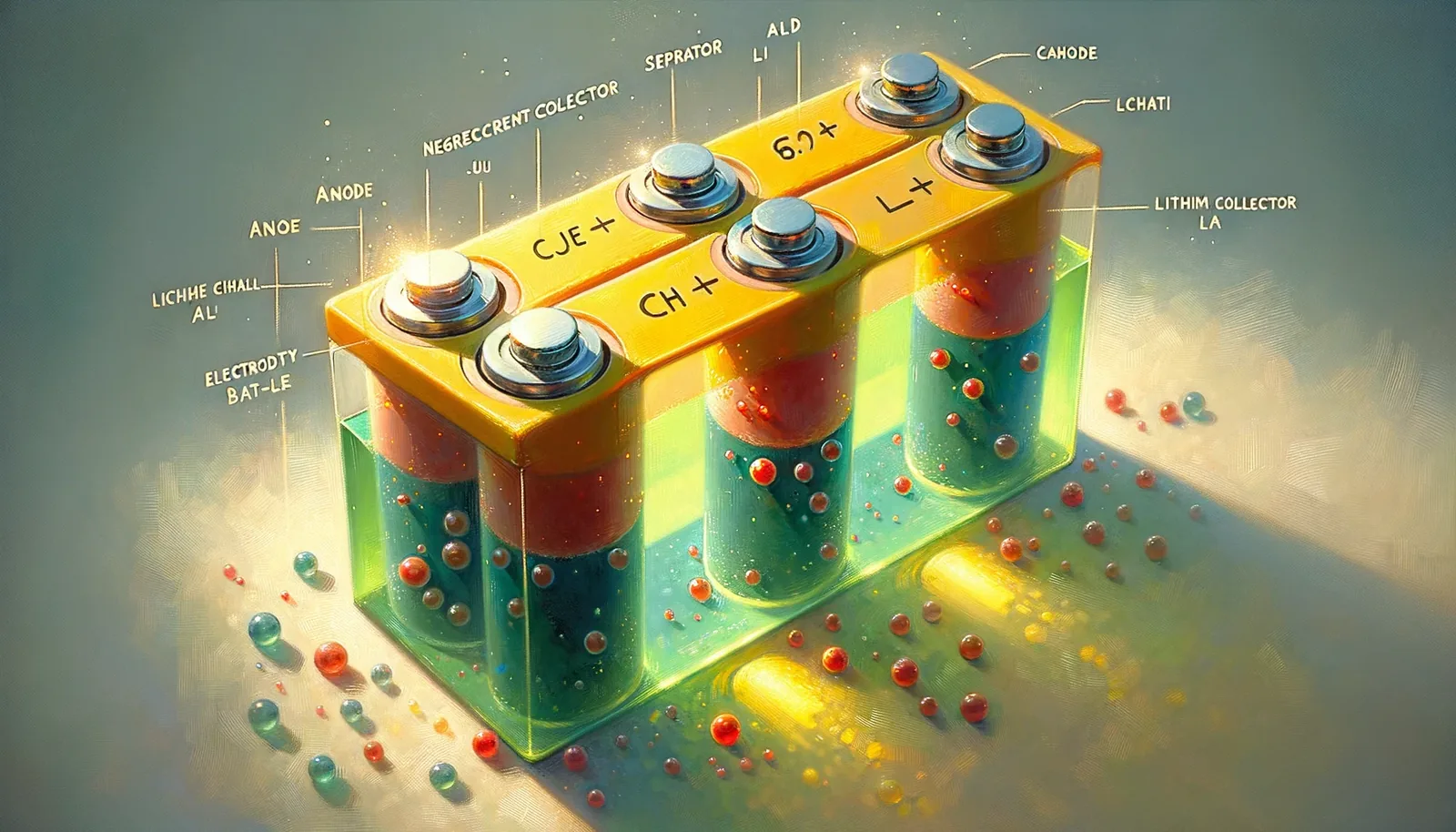
"Negreccrent Colector" and "Electrodty Bat-le" are not components. The labels should point to the anode, the cathode, the separator between them, and Li+ ions in the electrolyte. Credit where due: the AI put ion spheres in a liquid, which is directionally right.
3. Cubism

The shapes here actually resemble prismatic cells, the format used in most EV packs alongside cylindrical and pouch cells. The labels "Neganvecurrent Cull" and "Loovid-Clrent Ocel" should be negative current collector and positive current collector. "Charge" and "Load" at the bottom are real words, so partial credit.
4. Minimalism
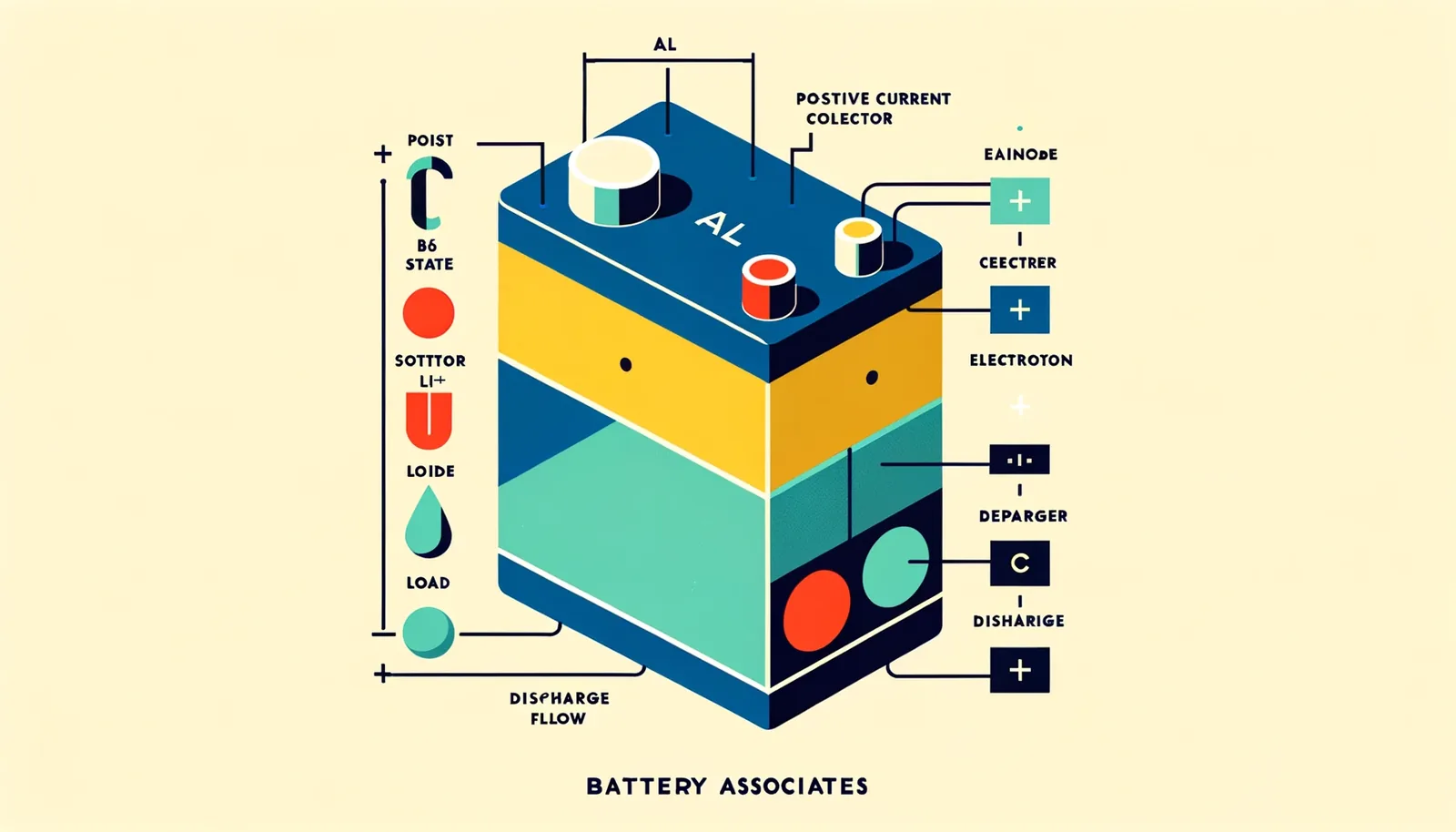
This one nearly works. "Positive Current Colector" is one letter off, "AL" correctly hints at aluminium foil, and "Discharge Flow" is a real concept. Then "Eainode", "Ceectrer" and "Deparger" ruin it. The right-hand labels should read: cathode, electron flow, separator, discharge.
5. Digital Neon
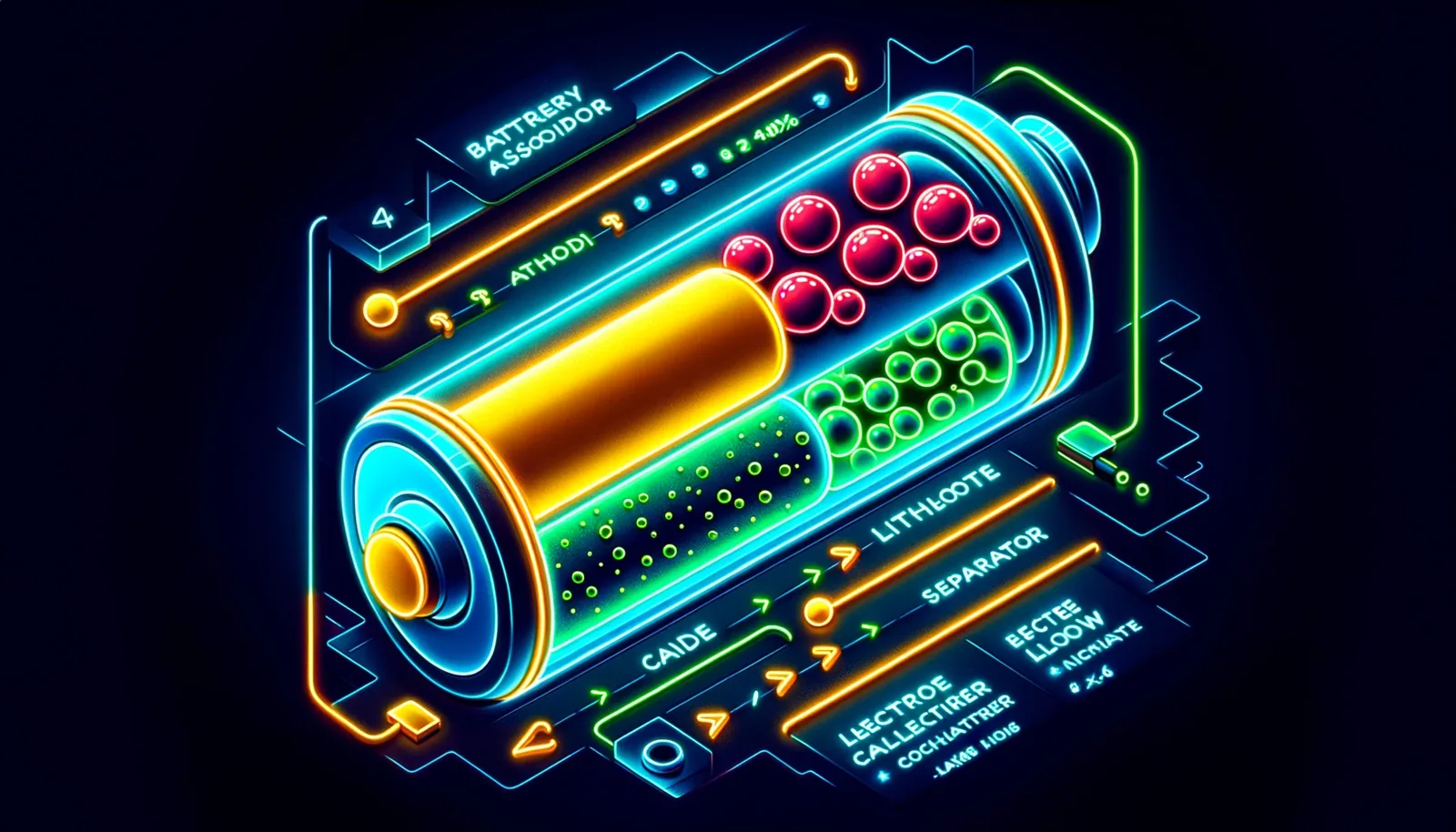
A cutaway of a cylindrical cell, the format of the 18650 and 4680. The red and green spheres suggest ions at the two electrodes. "Athodi", "Caide" and "Lithloote" should be anode, cathode and lithium. "Separator" is spelled correctly once, which for this AI counts as a milestone.
6. Origami
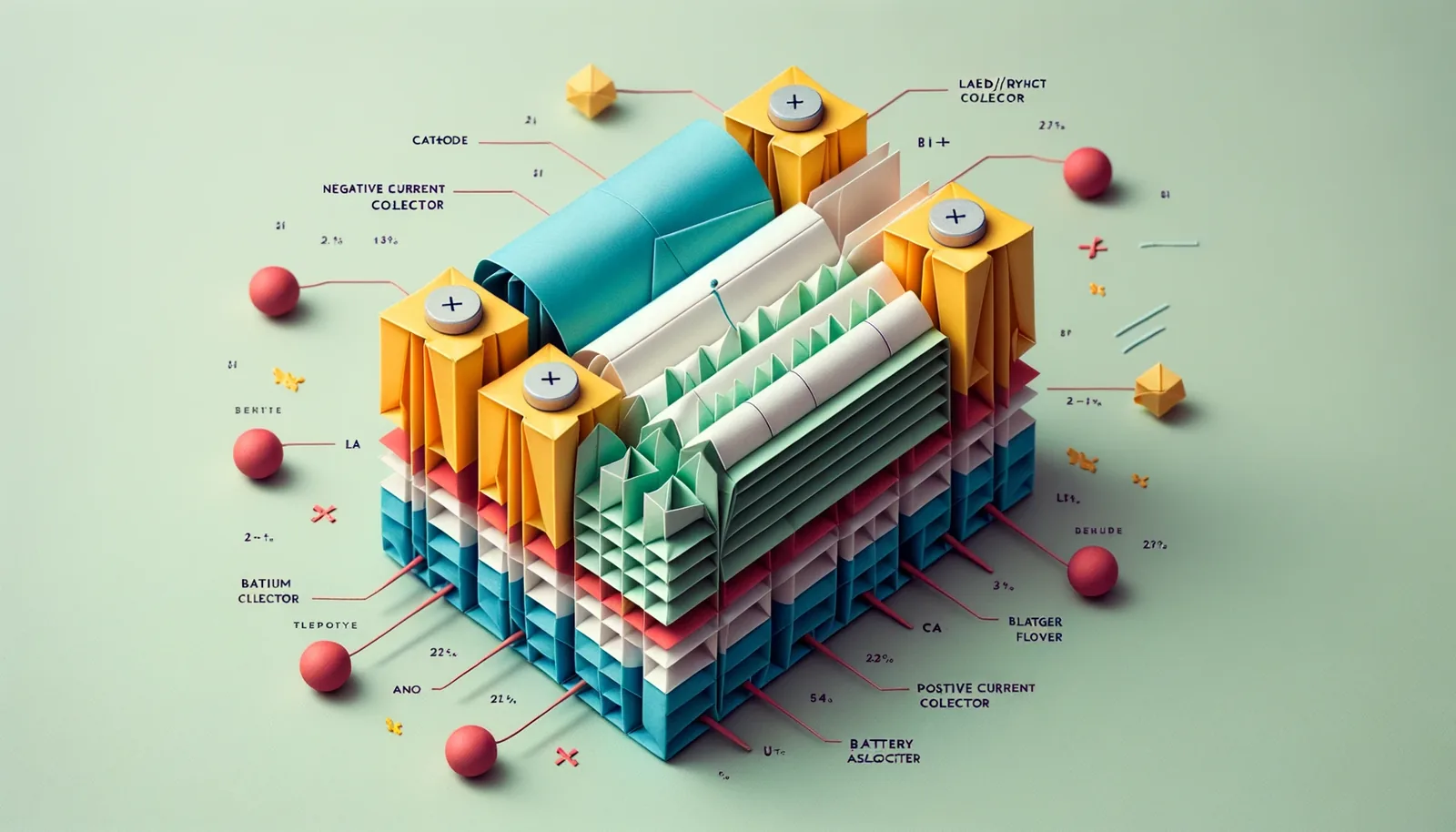
The accidental highlight of the set. Those pleated paper folds look a lot like the z-fold stacking used in real pouch cell manufacturing, where the separator zigzags between alternating anode and cathode sheets. The AI got "Cathode", "Negative Current Collector" and "Positive Current Collector" right, its best spelling performance across all six images. Then it added "Batium Clector", "Tlepotye" and "Blatger Flover", which sound like rejected Pokemon. "Tlepotye" is presumably electrolyte after a paper jam.
Why an AI can't label a battery
Image models in 2023 learned what battery diagrams look like without learning what they say. Text in the training images became texture, not language. So the model reproduces the shape of a labelled diagram and fills the labels with plausible letter salad.
The composition knowledge is real, though. The AI consistently placed two electrodes, something between them, terminals on top, and ions in a liquid. It absorbed the architecture of a cell from thousands of diagrams. It just can't spell separator. Usually.
If you want the version with correct labels and the electrochemistry behind it, that's week 1 of BatteryMBA. We cover the full value chain in 12 weeks, from cell components to gigafactories to second life. Taught by humans who can spell electrolyte.
Want to be in the next cohort?
Cohort 18 runs 14 September – 5 December 2026. Enrolment is open.